What Does a Live Production Workflow Review Actually Cover?
The question we hear most before a review is what lands on the desk afterwards. Here is what is examined, how the written report is arranged, and what you are asked to prepare.
5 min read
The question behind the question
Almost every conversation about a review starts the same way: what will we actually receive, and will it tell us anything we do not already suspect? It is a fair thing to ask. Producers and studio managers are busy, and a document that restates what the crew already knows is a poor use of anyone's week. A review is not a verdict on people. It is a written account of how a show moves from planning to picture and sound on air or on disk, with the weak joins marked and ranked.
I am Priya, and I work on the audio side at glitara, so I tend to hear this question from teams whose trouble first appears as sound: drifting lip-sync, a mix that changes between rehearsal and transmission, or a talkback line nobody trusts. Those symptoms usually trace back to decisions made elsewhere in the chain, which is why the review looks at the whole workflow rather than one department.
What we look at on site
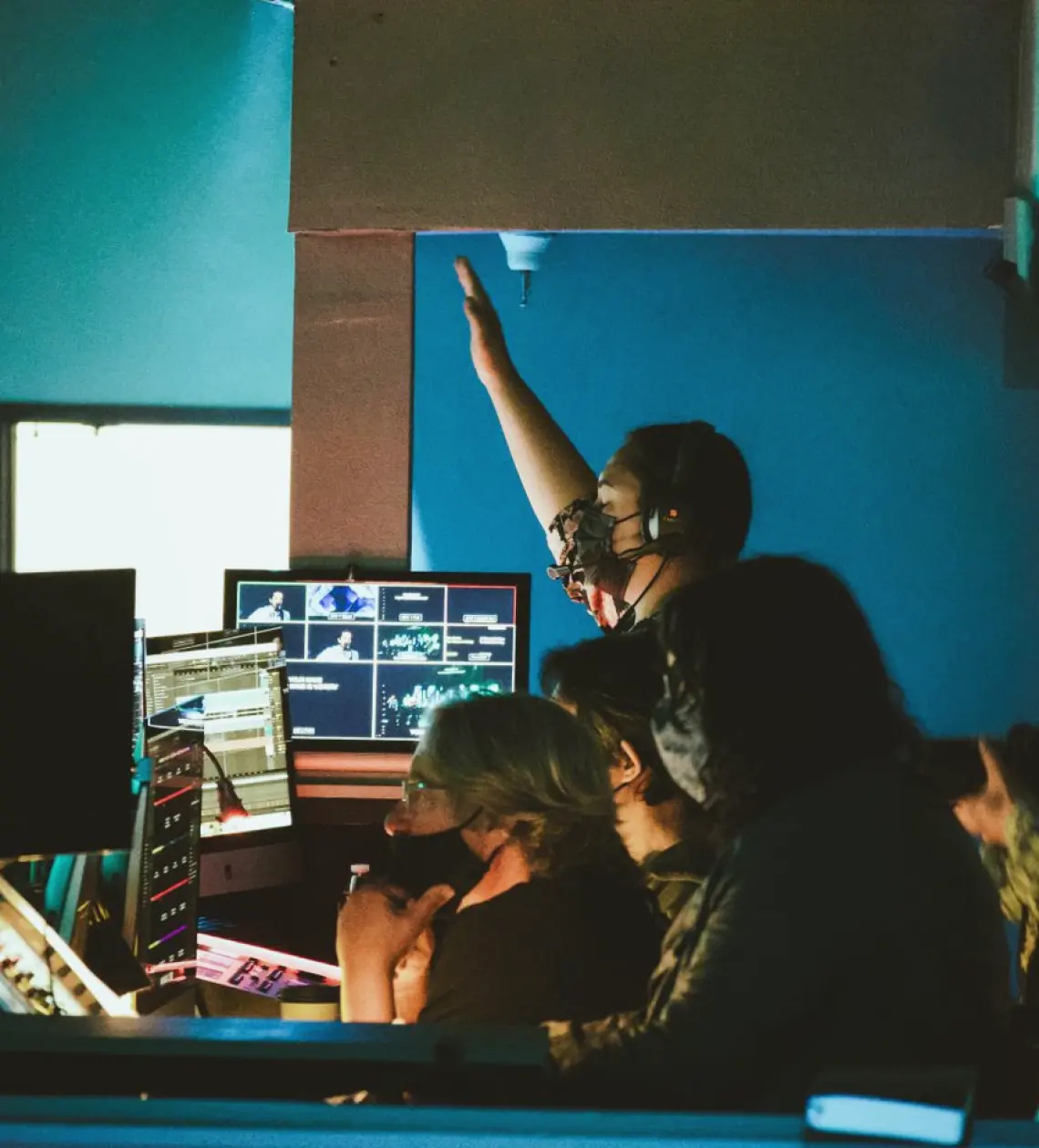
We start by watching a working day, or a rehearsal and a transmission if that is how your schedule runs. Nothing is staged for us. We follow the signal from camera heads and microphones through routing, the control room and into recording or distribution, and we note where people compensate for the equipment instead of the equipment doing its job. A handwritten sticker on a monitor often tells us more than a system diagram.
Alongside the observation we read whatever documentation exists: patch lists, run sheets, shot lists, operator notes. Gaps in these are findings too. If only one person knows why a certain input is muted before the opener, that is a risk to the show, and it goes into the report in plain words.
- Signal path from source to output
- Audio and video timing between sources
- Control room layout and operator habits
- Documentation, run sheets and handovers
- Recording, archive and delivery steps
How the written report is arranged
The report is written, not presented as slides, so that it can be passed around the team and reread when a decision comes up months later. Each finding states what we saw, why it matters for the programme, and what we suggest. Recommendations are ranked by how much trouble they prevent against how much effort they take, so you can see which fixes belong in the next week and which belong in a planned shutdown.
We keep the language ordinary. Where a technical term is unavoidable, it is explained once where it first appears. A producer should be able to read the summary and understand the priorities without an engineer beside them, while the technical sections give the crew enough detail to act without calling us.
What we ask you to prepare
Preparation is light. We ask for a short description of the show or shows, the usual crew size, and the problems that prompted the review. If you have a system drawing, even a rough one, send it; if you do not, we will draw one together during the visit. Access to rehearsals and to the people who run the gear matters more than any paperwork.
It also helps to tell us what you do not want touched. Some set-ups are fixed by contract, venue rules or a budget already spent, and a recommendation that ignores those limits wastes your time. Telling us early lets us write advice that fits the room you actually have.
- A short note on the show and the crew
- Any existing drawings or patch lists
- Known faults and the dates they occurred
- Constraints we should respect
What a review does not do
A review does not replace installation or engineering work, and it does not rewire a studio. It tells you what to change and in what order. If you want help carrying out the recommendations, that is a separate conversation and a separate quotation, and nothing in the report commits you to it. The findings are yours to use with your own engineers or any contractor you prefer.
Nor can a review promise that every fault disappears. Some problems come from the venue, the link provider or the age of the equipment, and we say so honestly. What you should expect is clarity: a list of causes, an order of attack, and a team that understands its own workflow a little better than before.
Questions teams ask before booking
Teams often ask how long the visit takes and how soon the report follows. That depends on the size of the operation, and we agree both in the written quotation before any work starts. A single studio with one regular show is a different job from a venue running several productions a week, and the quotation reflects that.
They also ask whether the crew will feel inspected. In my experience the opposite happens: operators are glad someone has noticed the awkward bits they work around every day. We talk to the people at the desks, credit what works, and keep the report about the system, not about who sits at it.
The most useful thing a workflow review gives a team is a shared, written picture of how its shows really run, with the risks put in order. If that sounds like what you need before the winter schedule fills up, send an enquiry through the contact page and describe your set-up. We will reply with a written quotation, and you can decide from there.
More from the guides
How to Check and Fix Lip Sync Drift Before a Live Show
A step-by-step method for finding audio delay in a studio chain, measuring it against picture, and setting compensation so presenters and playback stay aligned for the whole programme.
How a lighting plot goes from empty grid to camera-ready studio
A look at how Daniel builds a lighting plot in practice: the site survey, the first sketch, the test on camera and the schedule handed to the crew.
What Audio Sync and Mixing Work Costs, and What Moves the Price
A plain account of how we price audio sync and mixing workflow work, which parts of a studio or venue add time, and what a written quotation covers.